For decades, the prevailing wisdom in astrophysics suggested that the birth of a black hole was always accompanied by a violent, sky-shattering explosion—a supernova. However, groundbreaking new observations are challenging this paradigm. In a stunning display of cosmic sleuthing, astronomers have captured what appears to be the “silent” collapse of a massive star in the Andromeda Galaxy, marking a monumental shift in our understanding of stellar evolution.
The Disappearing Act of M31-2014-DS1
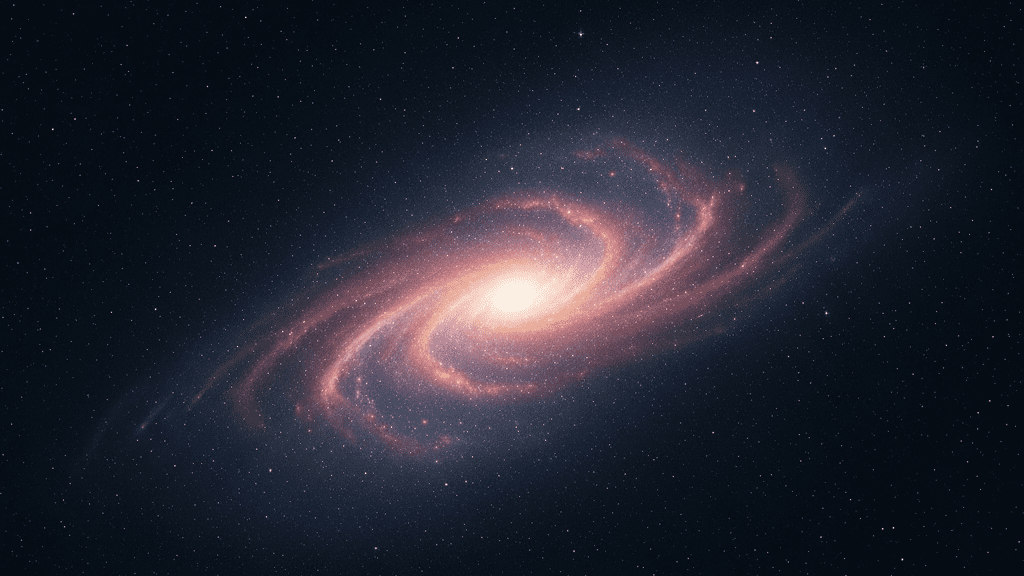
Using archival data from NASA’s NEOWISE mission, a research team led by Kishalay De of Columbia University identified a peculiar event involving a star labeled M31-2014-DS1. Located approximately 2.5 million light-years away in our neighboring Andromeda Galaxy, this star was no small player; it was roughly 13 times the mass of our sun and shone with the brilliance of 100,000 suns. To put that into perspective, its prominence in the sky was comparable to the red supergiant Betelgeuse.
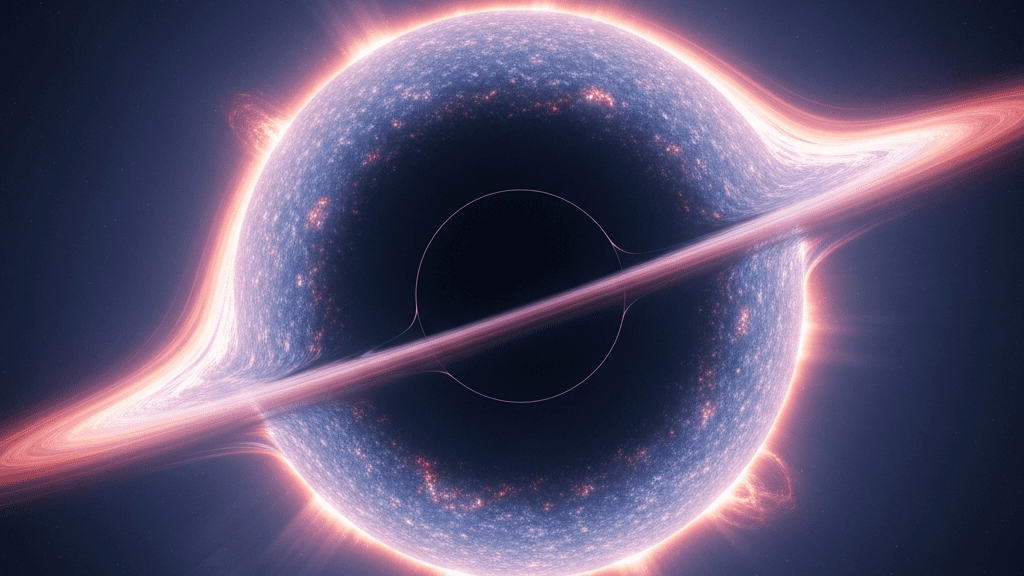
Then, something extraordinary happened. Over the course of a decade, the star brightened significantly, faded dramatically, and ultimately vanished from the mid-infrared spectrum. There was no detectable supernova, no blinding flash of light—just a quiet transition into the void. This suggests the star underwent a “failed supernova,” collapsing directly into a black hole under its own gravity.
Breaking the Massive Star Paradigm
This discovery is a game-changer for stellar physics. Traditionally, it was believed that only the most massive stars possessed the requisite gravitational pull to form black holes, and even then, only after shedding their outer layers in a cataclysmic explosion. M31-2014-DS1, at 13 solar masses, is relatively lightweight for a black hole progenitor.
As Kishalay De noted, these observations are finally dismantling the long-held belief that black holes are reserved exclusively for the most gargantuan stars. If stars of this mid-range mass can quietly collapse, it implies that the universe is likely teeming with many more black holes than our current models predict. We aren’t just looking for the bright explosions anymore; we’re looking for the stars that simply stop existing.
The Power of Infrared Archival Data
The identification of M31-2014-DS1 highlights the incredible value of long-term sky surveys like NEOWISE. By looking back through years of infrared data, astronomers can track the life cycles of stars in ways that visible-light telescopes cannot. Infrared light allows us to see through cosmic dust and witness the thermal signatures of stars as they reach their end-of-life phases.
- Long-term Monitoring: Capturing a decade of flux allows scientists to rule out temporary obscuration by dust.
- Multi-wavelength Analysis: The disappearance in infrared is a “smoking gun” for a total gravitational collapse.
- Statistical Significance: Finding one such event in a neighboring galaxy suggests these “failed supernovae” may be more common than previously thought.
A New Frontier in Black Hole Research
The implications of this find are profound. If direct collapse is a common pathway for stellar death, it changes how we calculate the total mass distribution of the universe and how we hunt for dark objects. We are entering an era where “seeing nothing” is just as important as seeing the brightest stars in the sky. As we refine our search techniques, we may find that the cosmos is full of these silent giants, marking the graves of stars that chose to go out with a whimper rather than a bang.
Source: Read the full article here.