
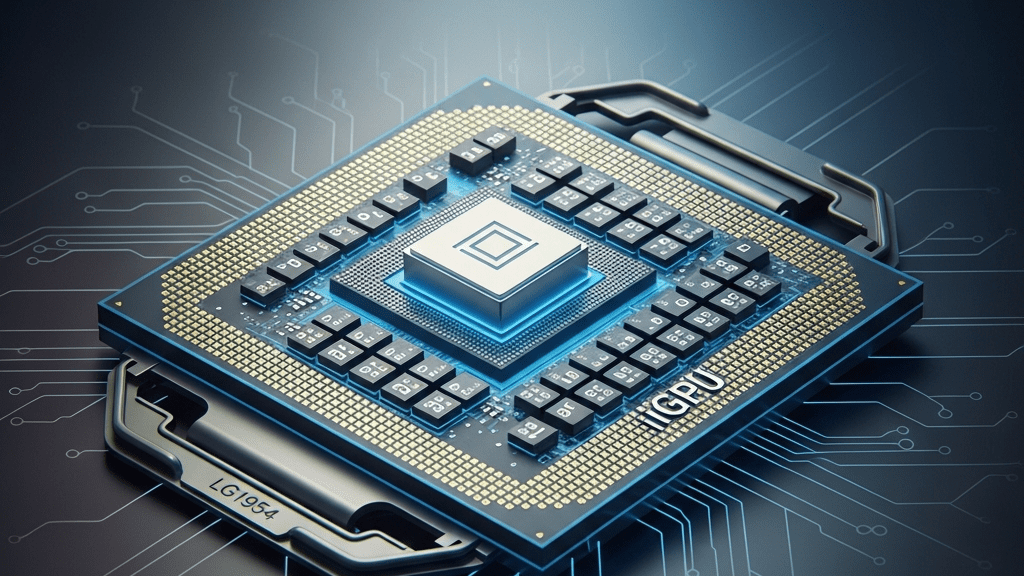
Intel is officially drawing a line in the sand. During a recent roadmap confirmation, CEO Lip-Bu Tan signaled that the company is preparing its most ambitious architectural shift in years: the Core Ultra Series 4, codenamed “Nova Lake.” Expected to land in late 2026, this isn’t just a minor iterative step—it is a full-scale offensive designed to reclaim the desktop performance crown from AMD.
A New Platform for a New Era: Socket LGA1954
For enthusiasts and system builders, the most immediate news is the transition to a new platform. While the upcoming “Arrow Lake Refresh” (Core Ultra Series 3) will serve as the swan song for the LGA1851 socket late this year and into early 2026, Nova Lake-S will debut the Socket LGA1954. This hardware shift reflects the fundamental design changes Intel is implementing to support massive increases in bandwidth, power delivery, and core density.
The Return of Massive Core Counts
Intel is leaning heavily into its hybrid architecture with Nova Lake, pushing core counts to staggering new heights. We are looking at a flagship configuration featuring up to 16 “Coyote Cove” P-cores and 32 “Arctic Wolf” E-cores. While HyperThreading remains absent on the P-cores—a move Intel continues to use to optimize area efficiency and power—the sheer numerical increase to 48 total physical cores more than compensates for it. Both core architectures are expected to deliver significant Instructions Per Clock (IPC) gains over the current “Lion Cove” and “Skymont” designs, ensuring that single-threaded and multi-threaded performance will see a generational leap.
Intel’s Answer to 3D V-Cache: Big Last-Level Cache (BLLC)
Gamers have long looked at AMD’s X3D processors as the gold standard for high-frame-rate gaming, but Intel is finally ready with a direct response. Nova Lake is expected to introduce specialized SKUs featuring BLLC (Big Last-Level Cache). This massive on-die cache is designed to eliminate memory bottlenecks and provide the low-latency data access that modern gaming engines crave. If the rumors of a 144 MB cache boost hold true, Intel may finally neutralize AMD’s gaming edge.
Celestial Graphics and the Copilot+ Era
Beyond the CPU cores, the platform is receiving a massive silicon injection for graphics and AI. Nova Lake will integrate a new iGPU based on the Xe3 “Celestial” architecture. This marks the third generation of Intel’s high-performance graphics architecture, bringing discrete-level features and efficiency to the integrated segment. Furthermore, the inclusion of a next-generation NPU ensures full compliance with Copilot+ requirements, making Nova Lake a formidable powerhouse for local AI workloads and productivity.
What This Means for the Market
The roadmap is now clear. With the Arrow Lake Refresh acting as a bridge in late 2025, Intel is giving itself the breathing room to perfect the Nova Lake architecture. By combining massive core counts, the revolutionary BLLC, and the Xe3 graphics engine, Intel is positioning the Core Ultra Series 4 as a “no-compromises” solution for gamers, creators, and AI enthusiasts alike. 2026 is shaping up to be one of the most competitive years in x86 history.
Source: Read the full article here.