
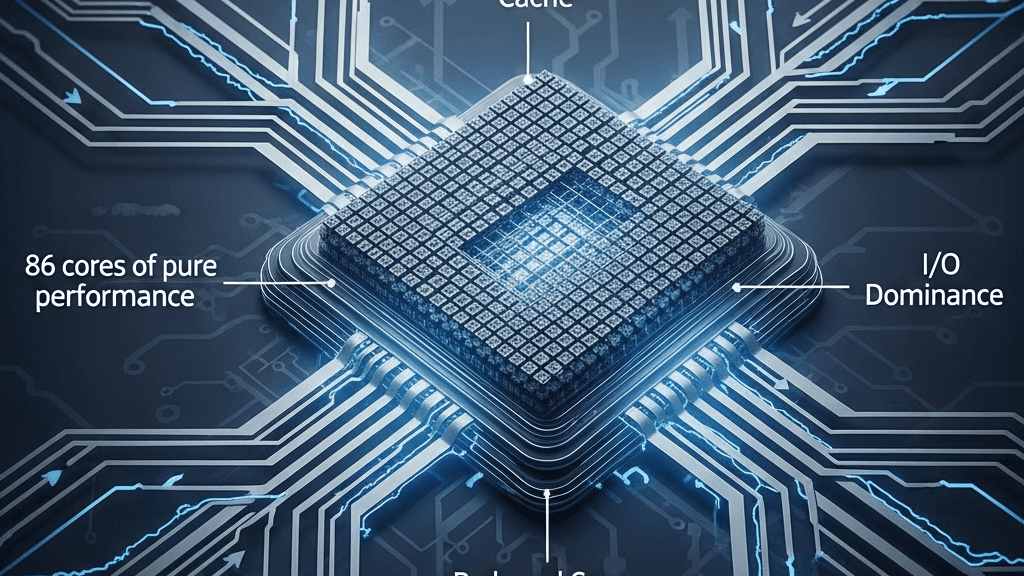
After a three-year hiatus that left enthusiasts and professionals clamoring for a true desktop successor, Intel is officially back in the workstation game. The long-rumored Granite Rapids-WS architecture has finally arrived under the unified Xeon 600 branding, signaling a massive shift in how Intel approaches high-end desktop (HEDT) and professional compute markets.
A Unified Architecture for Professional Power
Moving away from the fragmented split of the previous generation—where users had to navigate the divide between Xeon W-2500 and W-3500 series—Intel has streamlined its entire desktop workstation stack under the Xeon 600 banner. This isn’t just a branding exercise; it’s a consolidation of power. By bringing the formidable Granite Rapids architecture from the data center to the desktop, Intel is offering a cohesive platform designed to handle everything from complex 3D rendering to massive AI datasets.
The Redwood Cove Revolution: 86 Cores of Pure Performance
At the heart of the Xeon 600 series lies the Redwood Cove microarchitecture. Unlike the hybrid designs seen in Intel’s consumer chips, these workstation behemoths are built exclusively with high-performance P-cores featuring Hyper-Threading. The result is a staggering jump in density and throughput.
The flagship Xeon 698X is a masterclass in silicon engineering, boasting an incredible 86 cores and 172 threads. Compared to the previous flagship (the 60-core w9-3595X), Intel is claiming a 9% boost in single-threaded tasks and a massive 61% leap in multi-threaded performance. For professionals whose workflows scale with core count, this is the generational jump we have been waiting for.
Unrivaled Throughput and Platform Features
Compute power is nothing without the bandwidth to feed it. Intel’s new platform doesn’t disappoint, offering cutting-edge features that push the boundaries of desktop workstation capabilities:
- Massive Cache: Top-tier SKUs feature up to 336MB of L3 cache, significantly reducing latency for data-intensive applications.
- Memory Speed: Support for MRDIMMs at up to 8000 MT/s across 8 memory channels, ensuring that memory bottlenecks are a thing of the past.
- I/O Dominance: Up to 128 lanes of PCIe 5.0, providing the headroom needed for multi-GPU setups, high-speed NVMe arrays, and high-bandwidth networking.
- High TDP for High Output: With base TDPs reaching 350W on the top-end models, these chips are designed for robust cooling solutions and sustained peak performance.
The Competitive Landscape and Availability
The release of the Xeon 600 series sets up a titanic clash with AMD’s Zen 5-based Threadripper 9000 chips. Intel is positioning itself aggressively, with 11 total SKUs—five of which will be available as boxed retail models for DIY builders and specialized system integrators.
While we are still waiting for final “on-shelf” confirmation, Intel has indicated that the wait is nearly over. Expect to see the new W890 motherboards and fully integrated systems from industry leaders like Dell, Lenovo, Supermicro, and Puget Systems hitting the market in late March. For the professional creator, engineer, or data scientist, the workstation market just got a lot more exciting.
Source: Read the full article here.