The journey back to the Moon is a marathon of precision, and NASA is proving that no detail is too small when it comes to crew safety. Following a rigorous Wet Dress Rehearsal (WDR) that concluded in the early hours of the morning, NASA has announced a strategic shift in the Artemis II launch timeline. While space enthusiasts were eyeing a February liftoff, the agency is now targeting March at the earliest to allow for a comprehensive data review and hardware refinement.
The High Stakes of the Wet Dress Rehearsal
The Wet Dress Rehearsal is the ultimate stress test for the Space Launch System (SLS) and the Orion spacecraft. It involves loading the rocket with its super-cooled propellants—cryogenic liquid hydrogen (LH2) and liquid oxygen (LOX)—and performing a full terminal countdown. This exercise is designed specifically to surface anomalies in a controlled environment rather than on launch day.
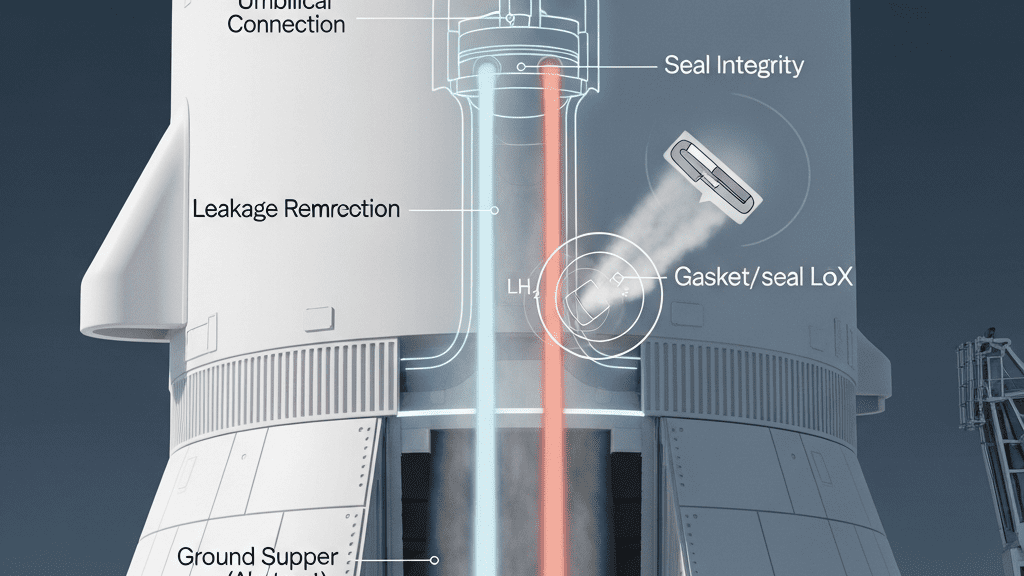
During the latest test, the SLS core stage performed admirably for the majority of the duration, but teams encountered a significant spike in liquid hydrogen leak rates at the interface between the rocket and the launch pad. While engineers successfully managed the leaks during the initial phases of tanking, the leak rate surged during the final practice countdown, prompting the ground launch sequencer to automatically halt the clock at T-minus 5 minutes.
Technical Deep Dive: Overcoming Hardware Hurdles
As a professional editor and space observer, it’s clear that these challenges are par for the course when dealing with the most powerful rocket ever built. The three-year gap between SLS launches naturally introduces a learning curve for ground systems and hardware interfaces. Key technical hurdles identified during the WDR included:
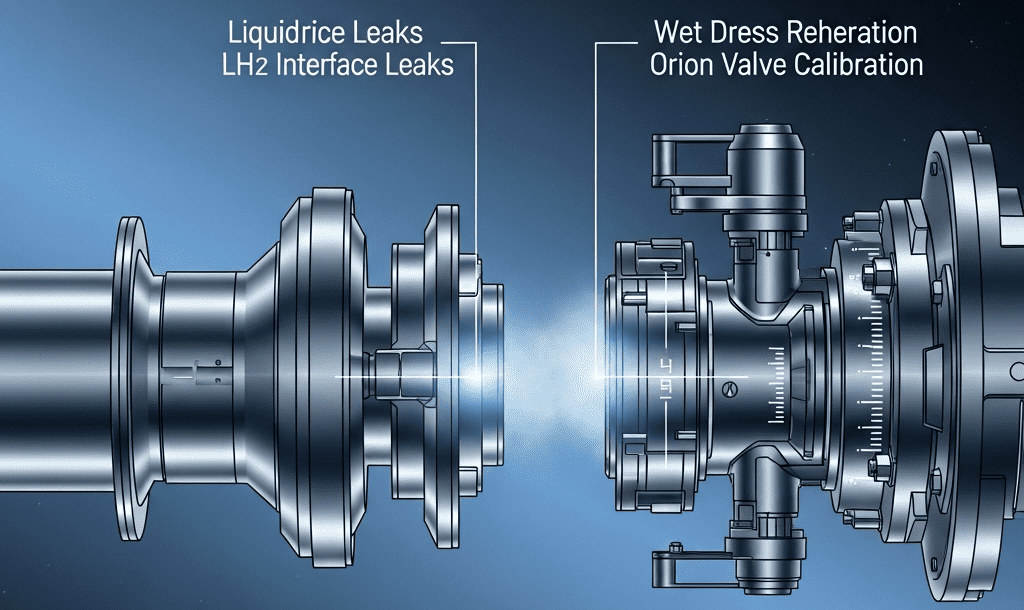
- LH2 Interface Leaks: Spikes in hydrogen leakage required pauses to warm hardware and recalibrate propellant flow.
- Orion Valve Calibration: During the closeout simulation, a valve associated with the Orion capsule’s pressurization system required manual retorquing, highlighting the necessity of the closeout crew’s meticulous procedures.
- Communication Integrity: Intermittent audio dropouts across various communication teams were noted and will be addressed to ensure seamless coordination during the actual flight.
Safety is the Primary Mission
NASA’s leadership and the Artemis II crew—Commander Reid Wiseman, Victor Glover, Christina Koch, and Jeremy Hansen—remain steadfast in their commitment to a safe mission. The four astronauts have concluded their pre-launch quarantine for the time being, returning to training as the engineering teams dive into the telemetry data. This mission will mark the first time humans have traveled to the lunar vicinity since the Apollo era, making the stakes higher than ever.
Looking Ahead to March
The decision to move the launch window to March is a testament to the “safety-first” culture that defines modern space exploration. By identifying these interface leaks and valve issues now, NASA is ensuring that when the SLS finally ignites, it does so with the highest possible probability of success. The next few weeks will be critical as technicians analyze the hardware at the core stage interface and finalize the Orion closeout protocols. Stay tuned as we move closer to this historic leap for humanity.
Source: Read the full article here.