Mars exploration just entered a high-speed era of autonomy. In a groundbreaking milestone for planetary robotics, NASA’s Perseverance rover has officially completed its first drive planned entirely by artificial intelligence. This shift from manual, human-plotted paths to AI-driven navigation marks a pivotal moment in how we explore the deep reaches of our solar system.
The Dawn of Autonomous Navigation on Mars
For decades, driving a rover on Mars was a painstaking process of “stop-and-go.” Engineers on Earth would download images, map out a path, and upload commands, often waiting hours for the data to travel across the void. With the integration of advanced AI planning, Perseverance is now capable of real-time decision-making that allows it to bypass obstacles that would have previously halted a mission for days.
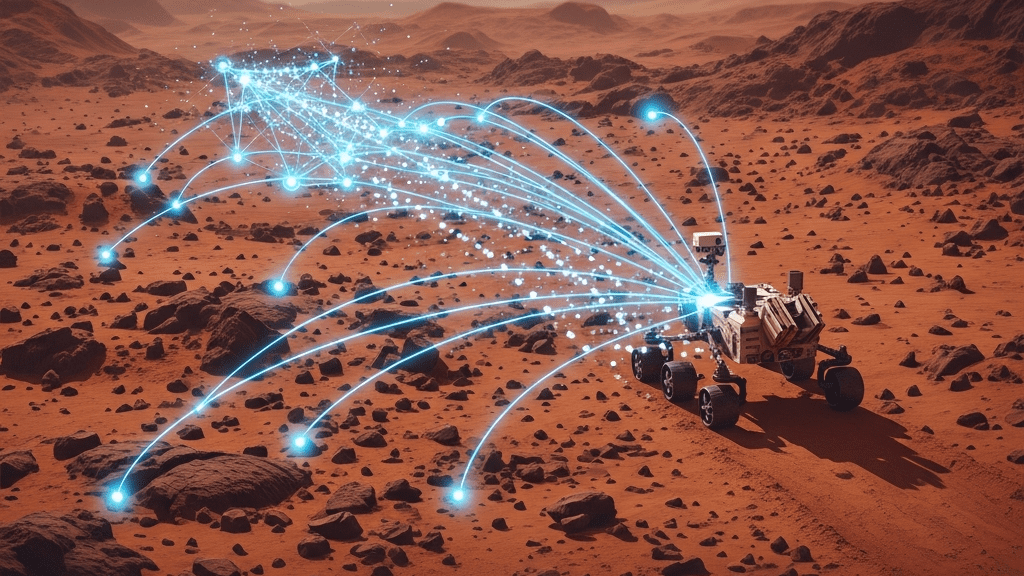
The rover utilizes its specialized AutoNav system, which acts as its “eyes and brain.” This technology allows the rover to perform several complex tasks simultaneously:
- Map out hazardous terrain in 3D using high-resolution stereo cameras.
- Evaluate slopes, sand traps, and sharp rocks in real-time.
- Calculate the most efficient path to its scientific destination without waiting for human intervention.
Why This AI Milestone is a Game-Changer
This isn’t just about speed; it’s about maximizing scientific output. Every minute the rover spends waiting for a command from Earth is a minute lost for drilling, sampling, and searching for signs of ancient life. By handing the “keys” to the onboard AI, NASA is effectively doubling the rover’s potential for discovery by allowing it to cover more ground in less time.
Currently navigating through the treacherous and rock-laden regions of the Jezero Crater, Perseverance has shown that its AI can handle the pressure. It maintains an unprecedented pace while ensuring the safety of the multi-billion dollar hardware, proving that robotic intuition is ready for the front lines of space exploration.
The Future of Deep Space Exploration
This success story is a precursor to what we can expect from future missions to the Moon, Europa, and beyond. As we push further into the solar system, communication lag becomes a critical bottleneck. AI-driven autonomy isn’t just a luxury; it’s a necessity for the next generation of explorers.
NASA’s achievement with Perseverance demonstrates that we are no longer just sending machines to space; we are sending intelligent partners capable of navigating the unknown on their own terms. As the rover continues its journey, it isn’t just following a map—it’s drawing a new one for the future of humanity.
Source: Read the full article here.