In the vast, crimson expanse of Jezero Crater, a technological revolution is unfolding. NASA’s Perseverance rover—already a marvel of modern engineering—has just leveled up its planetary exploration game. The rover is now autonomously pinpointing its own location on Mars, a feat that marks a massive leap forward in how we explore distant worlds. This isn’t just a minor software patch; it’s a paradigm shift in robotic autonomy.
The Power of Onboard Intelligence
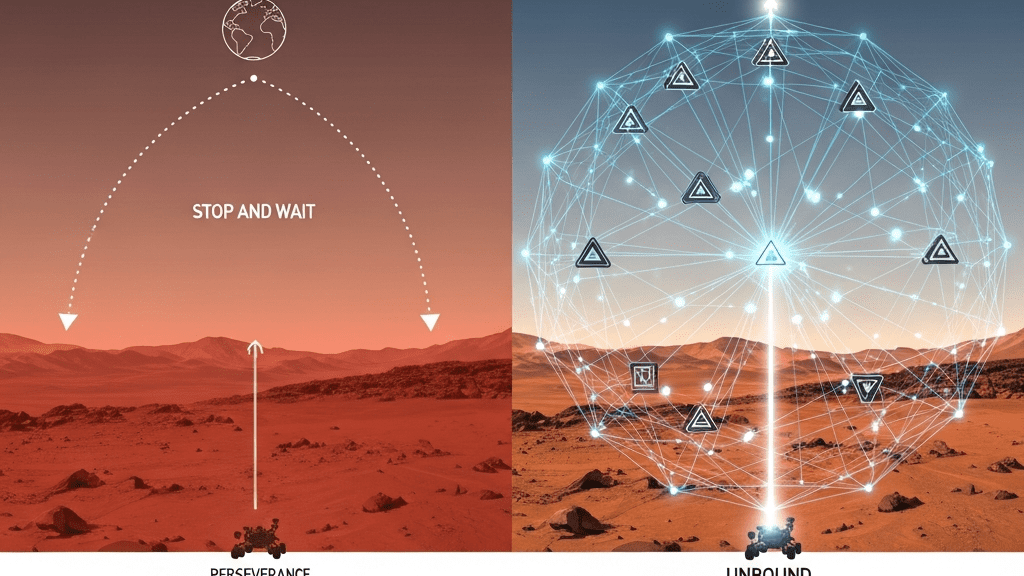
Historically, navigating the Martian surface has been a painstaking process of “stop and wait.” Rovers would capture images, beam them back to Earth via the Deep Space Network, and wait for human engineers to map out every meter of the path ahead. While effective, this created a significant bottleneck. With its latest capabilities, Perseverance is shattering those limits using its advanced AutoNav (Autonomous Navigation) system.
By processing visual data in real-time, the rover can identify landmarks and terrain features to determine exactly where it stands in relation to its destination. This level of self-awareness allows it to make complex navigational decisions without waiting for a signal from millions of miles away.
Redefining Speed and Precision
Why does autonomous localization matter so much? It all comes down to efficiency and the pace of discovery. By offloading the localization process to the rover’s onboard computers, NASA has unlocked several key advantages:
- Reduced Downtime: The rover no longer needs to pause for extended periods to wait for Earth-based instructions, allowing for continuous movement during its operational windows.
- Increased Distance: Perseverance can now cover more ground in a single Martian day (sol), pushing further into the ancient river delta that may hold clues to past life.
- Enhanced Safety: Real-time localization allows the rover to detect and circumvent hazards like soft sand or jagged rocks more effectively than ever before.
A Foundation for the Future of Spaceflight
As an expert observer of space tech, it is clear that what we are seeing with Perseverance is a masterclass in edge computing. We are essentially watching the birth of true robotic independence in deep space. These advancements aren’t just for Mars; the lessons learned here will be foundational for the Artemis missions to the Moon and eventual crewed missions to the Red Planet.
When humans finally set foot on Mars, they will rely on autonomous scouts like Perseverance to map the terrain, transport supplies, and ensure safety. By mastering autonomous localization today, NASA is building the navigational infrastructure of tomorrow. The Red Planet has never felt closer.
Source: Read the full article here.