
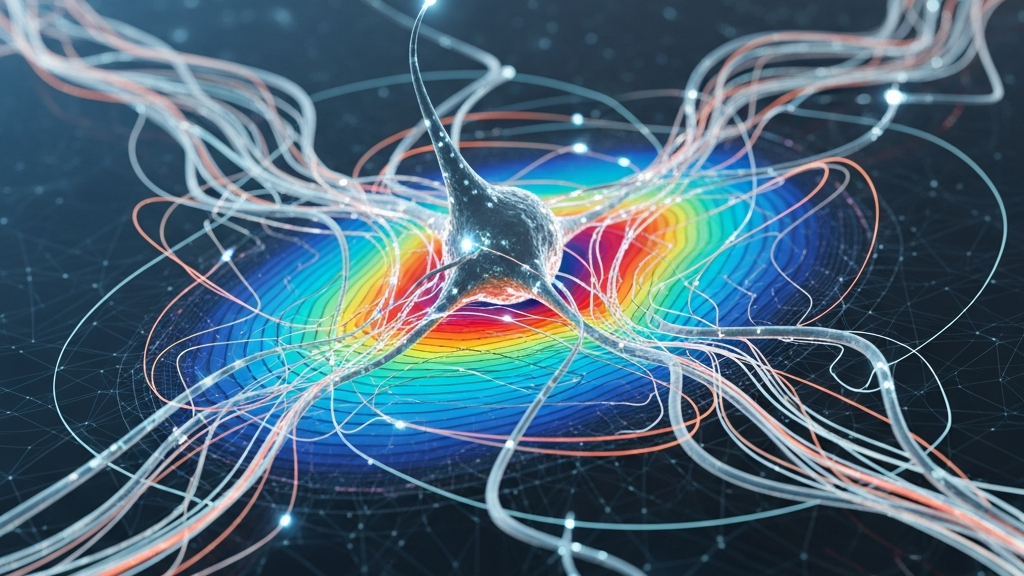
For years, the consensus in the high-performance computing (HPC) community was clear: neuromorphic hardware—systems designed to mimic the human brain’s architecture—was excellent for pattern recognition and low-power edge AI, but fundamentally unsuited for the rigorous, high-precision mathematics required by hard science. That consensus just shifted. In a groundbreaking study published in Nature Machine Intelligence, researchers at Sandia National Laboratories have demonstrated that brain-inspired computers can solve the complex partial differential equations (PDEs) that underpin modern physics and engineering.
A Paradigm Shift in Computational Architecture
Traditional von Neumann architectures, which power today’s most potent supercomputers, are hitting a wall. They are increasingly energy-hungry and restricted by the ‘memory wall,’ where moving data between the processor and memory consumes the lion’s share of energy. Neuromorphic systems, however, operate on a fundamentally different principle. By processing information in parallel using spiking neural networks, they mimic the brain’s incredible energy efficiency.
Until now, these systems were largely relegated to ‘fuzzy’ tasks like image classification or sensor fusion. The research led by computational neuroscientists Brad Theilman and Brad Aimone changes the narrative. By developing a specialized algorithm, they’ve proven that neuromorphic hardware can handle the deterministic, high-precision world of PDEs—the mathematical foundation for everything from fluid dynamics and electromagnetic fields to structural mechanics.
Cracking the PDE Code
Partial differential equations are the language of the physical world. They allow us to model how weather systems move across a continent, how heat dissipates through a new material, or how airflow interacts with a hypersonic wing. Solving these equations is computationally expensive, usually requiring massive clusters of GPUs and CPUs running at megawatt scales.
The Sandia team’s breakthrough lies in a novel algorithmic approach that allows neuromorphic chips to represent and solve these equations using a fraction of the power. This isn’t just a minor optimization; it is a fundamental rethinking of how we execute scientific simulations. By leveraging the sparse, event-driven nature of neuromorphic hardware, the researchers demonstrated that we can achieve supercomputer-level results without the supercomputer-level energy bill.
The Road to the First Neuromorphic Supercomputer
This discovery opens a direct path toward the development of the world’s first neuromorphic supercomputer. Such a machine would represent a leap forward for several critical sectors:
- Climate Modeling: Running high-resolution weather and climate simulations with significantly lower carbon footprints.
- National Security: Enhancing advanced simulations for nuclear stewardship and structural analysis at speeds previously thought impossible.
- Aerospace Engineering: Real-time fluid dynamics modeling for faster, safer aircraft design.
- Fundamental Science: New insights into how the human brain itself might be solving complex spatial and physical problems.
The Future is Brain-Inspired
As we move toward the exascale era and beyond, the energy efficiency of our hardware will be the primary bottleneck for scientific discovery. The Sandia National Laboratories study serves as a proof-of-concept that we don’t have to choose between mathematical rigor and energy efficiency. By embracing the architecture of the brain, we are unlocking a future where the most complex simulations of our universe can be run on hardware that is as elegant and efficient as the biological systems that inspired it. The era of the neuromorphic supercomputer has officially begun.
Source: Read the full article here.