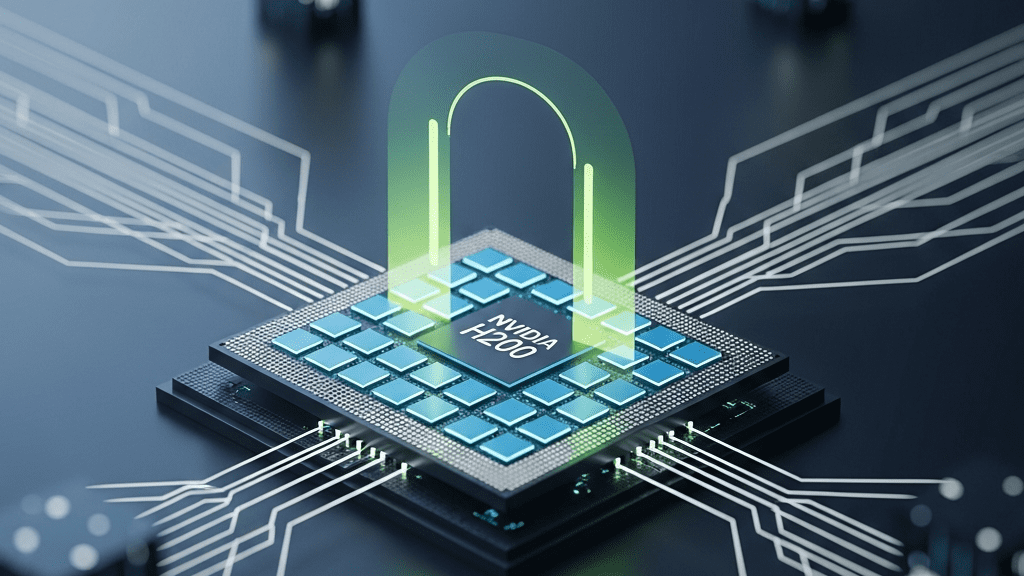
The global AI landscape is witnessing a massive strategic shift as China moves to unlock access to the world’s most sought-after hardware. In a development that has sent ripples through the tech industry, Chinese regulators have reportedly granted conditional approval for major AI players—including the disruptive startup DeepSeek—to acquire Nvidia’s powerhouse H200 chips. This move signals a significant thawing in the hardware bottleneck that has constrained Chinese AI development over the past year.
Breaking the Hardware Bottleneck
While the U.S. government formally cleared the path for Nvidia to sell the H200 to Chinese customers earlier this month, the primary obstacle has surprisingly been Beijing’s own regulatory hesitation. That dynamic is now changing. Reports indicate that the Chinese Ministry of Industry and Information Technology (MIIT) and the Ministry of Commerce have granted approvals to a select group of tech titans. ByteDance, Alibaba, and Tencent are reportedly cleared to purchase a staggering combined total of over 400,000 H200 chips.
DeepSeek, the startup that recently rattled the industry by producing high-performance models at a fraction of the cost of Western rivals, is also on the list. For an industry focused on efficiency and scale, the influx of H200s—Nvidia’s second-most powerful AI processor—represents a massive infusion of compute power that could accelerate the next generation of LLMs.
DeepSeek: The Disruptor Gets More Firepower
DeepSeek’s inclusion in this deal is particularly noteworthy for anyone tracking the efficiency of AI training. Known for its ability to optimize models with limited resources, DeepSeek is currently preparing to launch its next-generation V4 model. With the added horsepower of the H200, the industry is keen to see if they can maintain their edge in coding capabilities and cost-efficiency while scaling up to meet the demands of global competition.
The Regulatory Tightrope
Despite the excitement, this isn’t a simple transaction. The deal remains shrouded in complexity. Nvidia CEO Jensen Huang recently noted that the company has not yet received formal confirmation of these approvals, suggesting that China’s state planner, the National Development and Reform Commission (NDRC), is still hammering out specific conditions. These stipulations are expected to be rigorous, reflecting the high stakes of dual-use technology.
Furthermore, the deal faces intense scrutiny from U.S. lawmakers. Allegations regarding the potential use of AI models in military applications continue to haunt the trade relationship between Silicon Valley and Beijing. As Nvidia navigates these geopolitical waters, the focus remains on delivering the compute necessary for the next leap in generative AI while adhering to a complex web of international compliance.
What This Means for the AI Race
This massive hardware acquisition marks a pivotal moment for the Chinese AI sector. By securing hundreds of thousands of H200 chips, ByteDance, Alibaba, and Tencent are positioning themselves to compete at the highest levels of model complexity. For DeepSeek, it’s a chance to prove that their architectural innovations can scale with the best hardware on the planet. As we look toward the middle of next month and the anticipated V4 launch, one thing is clear: the race for AI supremacy is entering a high-octane new phase.
Source: Read the full article here.