
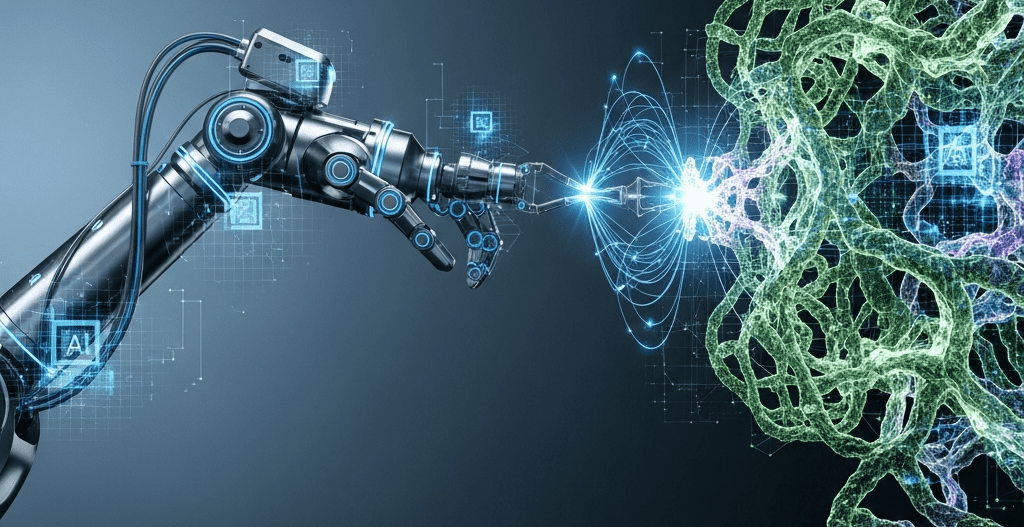
For years, the intersection of artificial intelligence and biology has been defined by prediction. We’ve used AI to propose molecular structures, suggest drug targets, and analyze massive datasets with unprecedented speed. However, a persistent bottleneck remained: the physical execution of experiments in the wet lab. Today, that barrier is being dismantled. Opentrons Labworks Inc. has announced a groundbreaking collaboration with NVIDIA to accelerate the development of physical AI-enabled laboratory robotics, effectively bridging the gap between digital simulation and real-world biological discovery.
Bridging Simulation and Reality with NVIDIA Isaac and Cosmos
By integrating the NVIDIA Isaac and NVIDIA Cosmos platforms, Opentrons is doing more than just automating repetitive tasks; they are teaching robots to understand and interact with the physical world of biology. This partnership leverages NVIDIA’s advanced physical AI software to develop high-fidelity training data specifically purpose-built for laboratory environments. This means robots are no longer just following static scripts—they are becoming intelligent agents capable of learning from real-world experimentation.
Leveraging a Global Network of 10,000 Robots
The scale of this initiative is staggering. Opentrons brings a unique set of real-world assets to the table, including a global fleet of more than 10,000 deployed robotic systems. These systems are already hard at work across leading research universities and biopharma companies. By tapping into this vast network, Opentrons and NVIDIA can generate the high-quality, real-world data necessary to refine AI models that can navigate the complexities of fluid handling, sample preparation, and instrument interfacing with expert-level precision.
Closing the Loop: From BioNeMo to the Bench
One of the most exciting aspects of this collaboration is how it completes the scientific lifecycle. While NVIDIA BioNeMo provides the foundational AI models for biological discovery, Opentrons provides the standardized physical execution layer. This creates a powerful “closed-loop” system:
- Hypothesis: AI models (like those in BioNeMo) propose a molecular structure or experimental plan.
- Execution: Opentrons’ physical AI-enabled robots execute the experiment in a real-world lab.
- Validation: The results from the wet lab are fed back into the AI to refine the model and inform the next round of testing.
The End of the Experimental Bottleneck
As Opentrons CEO James Atwood noted, the future of science lies in autonomous experimental execution. Until now, the speed of discovery was limited by the manual labor of the lab. By standardizing execution and generating continuous learning streams from real laboratory operations, this partnership is turning the lab into an intelligent, self-evolving ecosystem. We are moving beyond the era of predictive AI and entering the era of physical AI—where the lab itself becomes an active participant in the discovery of the next life-saving therapy.
Source: Read the full article here.