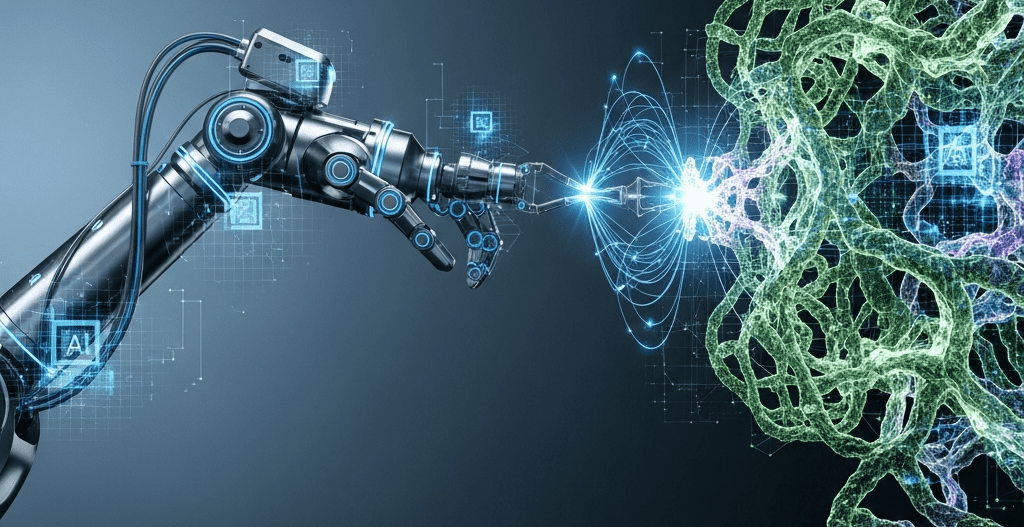
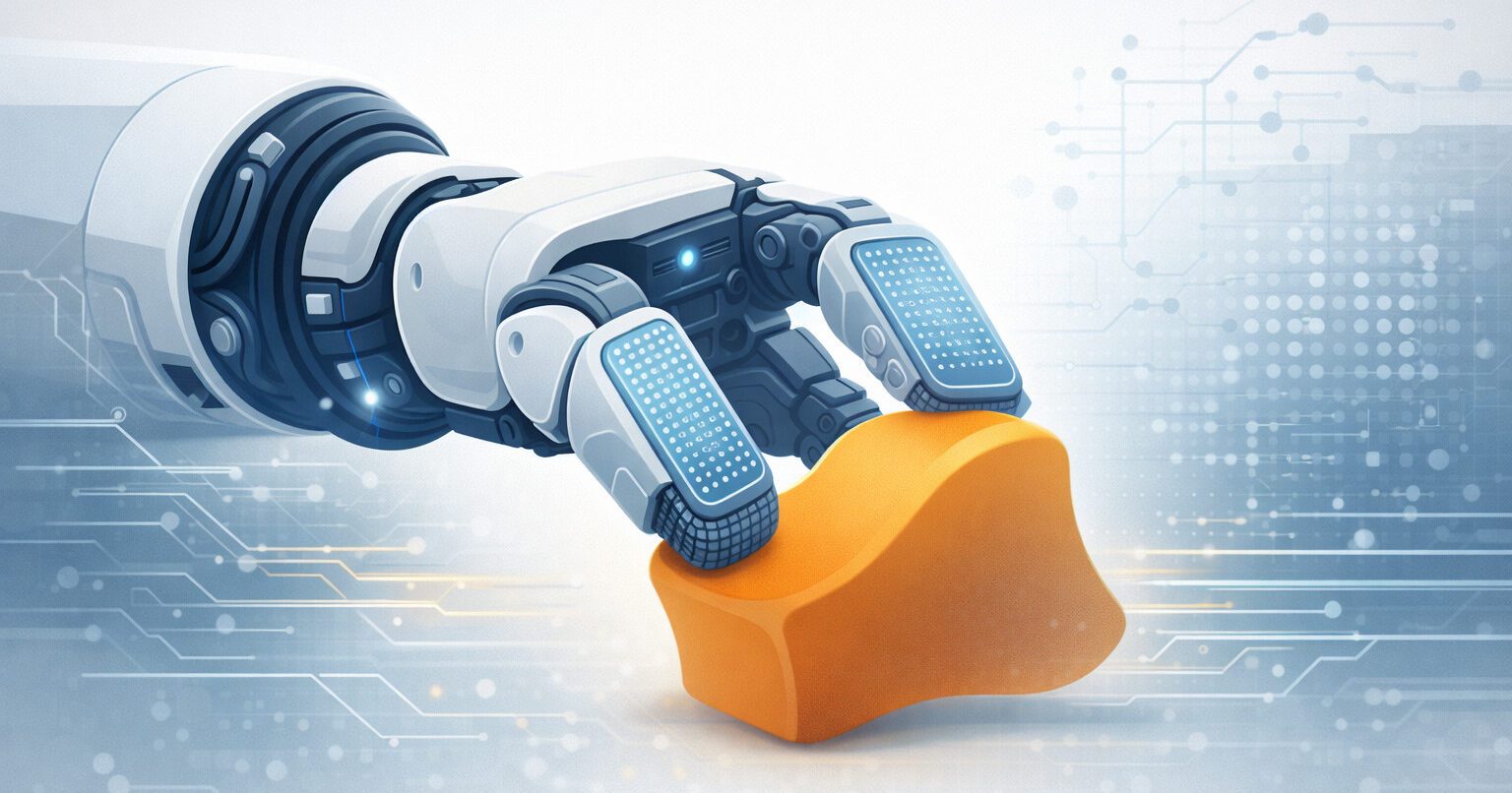
The robotics industry is standing at a pivotal crossroads. While computer vision has allowed robots to perceive their surroundings with startling clarity, the true challenge of “Physical AI” has always been the interface between the digital mind and the physical world. Today, Robotiq has bridged that gap with the launch of the TSF-85 tactile sensor fingertips, a breakthrough that finally gives robots a sophisticated sense of touch.
Designed as a seamless upgrade for the industry-standard 2F-85 Adaptive Gripper, these high-frequency tactile sensors represent a shift from robots that merely follow coordinates to robots that truly understand manipulation. By integrating contact awareness directly into the gripping surface, Robotiq is enabling a future where robots can feel, adapt, and interact with the world at scale.
Beyond Vision: Why Touch is Essential
In the real world, vision alone is often insufficient for complex manipulation. Factors like occlusion, varying textures, and shifting centers of gravity make rigid, vision-only paths prone to failure. Physical AI requires a feedback loop that vision cannot provide on its own. The TSF-85 fingertips provide the critical data points necessary for robots to generalize across diverse tasks without the need for expensive, high-maintenance anthropomorphic hands.
By bringing tactile feedback to a proven industrial platform, Robotiq allows systems to achieve human-like dexterity through:
- Incipient Slip Detection: Sensing when an object is beginning to slide and adjusting grip force in real-time before a failure occurs.
- Contact Geometry Awareness: Understanding the exact physical relationship between the gripper and the object, regardless of visual data quality.
- High-Frequency Feedback: Providing the rapid data stream necessary for training sophisticated machine learning models in Physical AI labs.
Adaptive Gripping Meets Industrial Dexterity
Robotiq’s 2F-85 has long been a favorite in the industry for its patented mechanical design that adapts to object shapes. By adding the TSF-85 tactile sensors, Robotiq has evolved this mechanical versatility into digital intelligence. This combination allows for a level of control that was previously reserved for laboratory prototypes, now made available for industrial-grade applications.
Vincent Duchaine, CTO of Artificial Intelligence at Robotiq, highlights the importance of this synergy: “Physical AI demands more than clever algorithms—it demands reliable interaction with the real world. By combining adaptive gripping with high-frequency tactile sensing, we’re giving robots the sense of touch and control they need to generalize across objects, tasks, and environments.”
A New Standard for AI Training and Humanoids
The implications for this technology extend far beyond the factory floor. For researchers in AI training labs and developers of humanoid robotics, the TSF-85 offers a cost-effective, durable solution for gathering the contact-rich datasets required for advanced manipulation. It eliminates the complexity of 20-degree-of-freedom robotic hands while providing the nuanced feedback those systems were designed to capture.
As we look toward a future where autonomous systems must handle everything from delicate electronics to unpredictable warehouse logistics, the sense of touch is no longer a luxury—it is a requirement. With the TSF-85, Robotiq has ensured that Physical AI can finally get a grip on the real world.
Source: Read the full article here.