
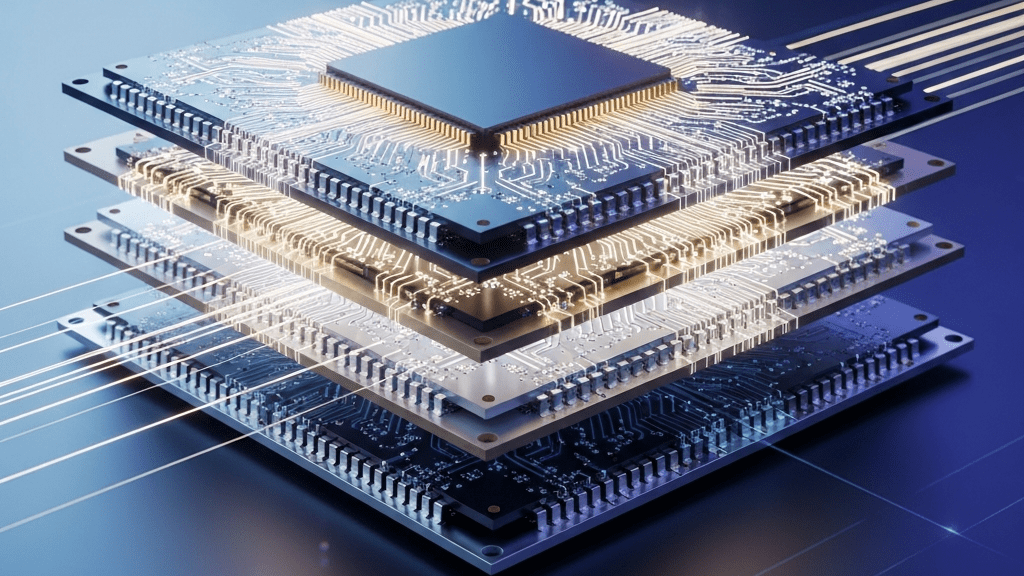
The global race for artificial intelligence supremacy has just entered its most high-stakes chapter yet. In a move that signals a massive shift in the semiconductor landscape, Samsung Electronics has officially announced the commencement of mass production for its next-generation High-Bandwidth Memory (HBM4) chips. This isn’t just a routine hardware refresh; it’s a strategic masterstroke designed to provide the sheer horsepower required for the next generation of AI data centers.
Breaking the Speed Barrier: 40% Faster Performance
Samsung isn’t just entering the HBM4 market; they are aiming to dominate it. The company’s latest breakthrough represents a significant leap over previous iterations, with processing speeds exceeding industry standards by more than 40 percent. For the tech giants scaling up vast neural networks, this performance delta is the difference between a bottleneck and a breakthrough.
The technical specifications of HBM4 are tailored specifically to meet the escalating demands of generative AI and large language models (LLMs). By delivering commercial products to customers ahead of previous roadmaps, Samsung has secured an early leadership position in a market where timing is everything.
Strategic Realignment for the NVIDIA Era
While the AI hardware conversation often centers on GPUs, the industry knows that silicon like NVIDIA’s H100 and Blackfront series is only as good as the memory feeding it. As NVIDIA maintains its position as the world’s most valuable company, the battle to remain their primary supplier has reached a fever pitch.
- Samsung: Aggressively pivoting after lagging in the HBM3 cycle to capture the HBM4 crown.
- SK Hynix: The long-time rival currently locked in a neck-and-neck race for production efficiency.
- Micron: Recently rebutting reports of a missed NVIDIA roster, Micron has confirmed high-volume production of their own HBM4, boasting speeds of 11 gigabits per second.
A $840 Billion Market Opportunity
The financial implications of this production milestone are staggering. Research from TrendForce predicts that global memory industry revenue will surge to a peak of more than $840 billion next year. Samsung is meeting this opportunity head-on by earmarking billions of dollars to upgrade existing lines and transition to advanced manufacturing processes.
By shifting from HBM3—where the company faced well-documented struggles to keep pace with SK Hynix—directly into a high-volume HBM4 rollout, Samsung is effectively “skipping a grade” to seize the moment. This aggressive capital expenditure ensures they remain at the heart of the AI infrastructure explosion.
The Bottom Line
For enterprise leaders and AI architects, the message is clear: the hardware bottleneck is widening. With Samsung, SK Hynix, and Micron all pushing the limits of HBM4, the compute power available for AI training and inference is about to hit an exponential curve. Samsung’s early lead in mass production doesn’t just benefit their balance sheet—it accelerates the entire roadmap for the global AI ecosystem.
Source: Read the full article here.