
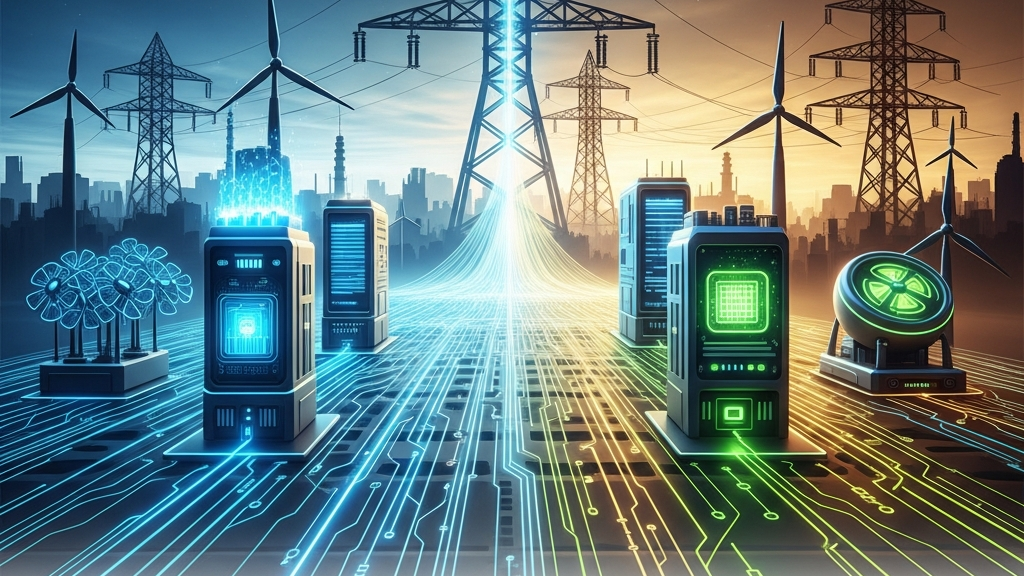
The landscape of American infrastructure just shifted. In a move that has sent shockwaves through both Silicon Valley and the energy sector, President Trump used his State of the Union address to issue a direct mandate to the titans of the AI era. The message was clear: if Big Tech wants to build the brains of the future, they must build the batteries—and the power plants—to support them.
The $100 Billion Question: Who Pays for the AI Grid?
Artificial Intelligence is the most power-hungry technology of our generation. Data centers powering the next wave of Large Language Models (LLMs) from the likes of OpenAI and Meta are consuming electricity at a scale that rivals entire metropolitan areas. Until now, the burden of expanding grid capacity has largely fallen on utility companies and, by extension, everyday consumers. The newly announced ‘Rate Payer Protection Pledge’ aims to flip that script, requiring tech giants to fund their own power generation to ensure that the AI boom doesn’t result in skyrocketing utility bills for the average American.
A High-Stakes Summit at the White House
On March 4th, the White House will host an unprecedented gathering of tech’s most powerful figures. This isn’t just a photo op; it’s a strategic pivot for national energy policy. Leaders from an elite coalition are expected to sign the pledge, including:
- The Hyperscalers: Amazon, Google, and Microsoft
- The Social & AI Giants: Meta and OpenAI
- The Infrastructure Titans: Oracle and xAI
This group represents the core of the global AI infrastructure race. Microsoft alone is funneling $80 billion into AI-enabled data centers this fiscal year. By bringing these rivals to the same table, the administration is signaling that energy self-sufficiency is now a prerequisite for technological dominance.
The Enforcement Gap: Policy or Political Theater?
As an industry expert looking at the fine print, the enthusiasm is tempered by a lack of concrete details. While the pledge sounds revolutionary, the current framework is conspicuously silent on binding targets, specific timelines, or penalties for non-compliance. We are currently seeing a ‘wait and see’ approach from the energy sector. Without a clear regulatory mechanism, it remains to be seen if this pledge will lead to a surge in private nuclear modular reactors and renewable microgrids, or if it will simply be a symbolic gesture.
The Path Forward for AI Infrastructure
Despite the lack of immediate enforcement details, the trend is undeniable. Forward-thinking companies like Google have already begun exploring next-generation power purchase agreements. This pledge accelerates that momentum. For the AI industry to remain sustainable—and politically viable—it must transition from being a consumer of the public grid to a producer of private energy. The March 4th event will be the first real litmus test of whether the tech industry is ready to take total responsibility for its staggering environmental and electrical footprint.
Source: Read the full article here.