
The TypeScript team has just dropped the first look at TypeScript 5.8 Beta, and it’s a massive win for anyone pushing the boundaries of the type system. If you’re ready to dive in and test the latest features, you can grab the beta today via npm:
npm install -D typescript@beta
While this release contains several optimizations, the real headliner for type enthusiasts is the introduction of Checked Returns for Conditional and Indexed Access Types. Let’s explore why this is a game-changer for writing safer, more expressive APIs.
The Problem: The Ambiguity of Union Returns
Commonly, we design functions where the return type depends on an input parameter. For example, consider a showQuickPick function that allows a user to select either a single item or multiple items based on a flag. Historically, we might have written it like this:
- If
selectionKindisSingle, return astring. - If
selectionKindisMultiple, return astring[].
The issue arises when we define the return type as Promise<string | string[]>. Even if the caller knows they requested multiple items, TypeScript treats the result as a union. This forces the caller to perform manual type checks or assertions just to use methods like .join(), leading to clunky and repetitive code.
The Solution: Precise Conditional Types
By using conditional types, we can make the return type dynamic based on the input generic. This allows the caller to receive the exact type they expect without extra casting:
type QuickPickReturn<S extends SelectionKind> = S extends SelectionKind.Multiple ? string[] : string;
While this has worked well for the callers of our functions in previous versions, the implementation of these functions was often a “black box” for the compiler. TypeScript wouldn’t effectively check if the value you were returning actually matched the complex conditional logic defined in your type signature.
What’s New in 5.8: Implementation-Side Safety
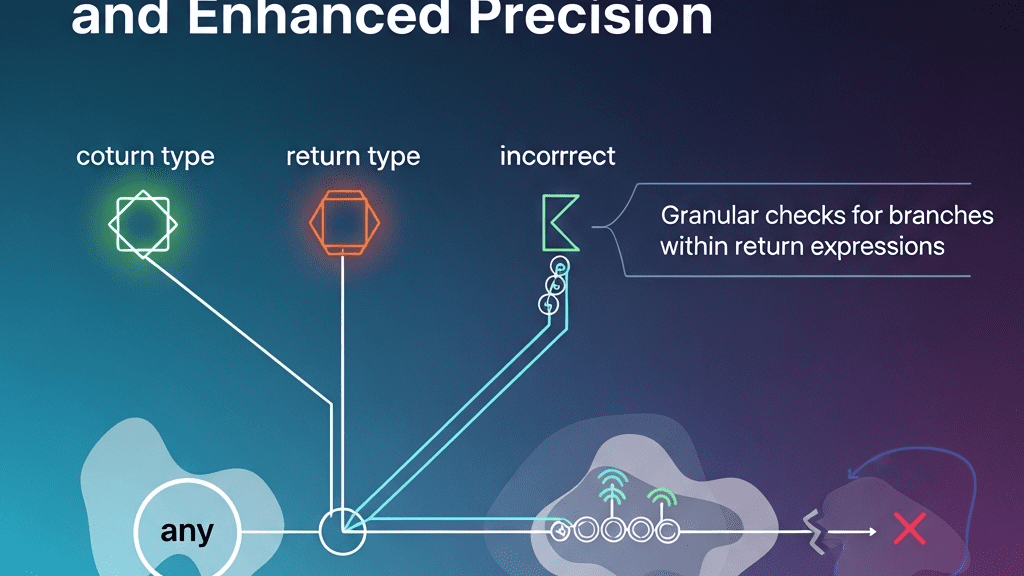
TypeScript 5.8 Beta closes the loop. The compiler is now significantly smarter at checking that the return statements within your function body actually satisfy the requirements of conditional and indexed access types. This reduces the need for unsafe type assertions (as any) inside your function logic.
When you implement a function with a conditional return type, TypeScript now validates that the branches of your logic align with the branches of your type. This ensures that if you promise a string[] when SelectionKind.Multiple is passed, you are actually returning an array, caught right at the point of implementation.
Why This Matters
This update represents a major step forward in making TypeScript’s most powerful features—conditional types—easier to use correctly. By providing safety on both the caller and the provider side, TypeScript 5.8 helps eliminate a whole class of “trust me, I know what I’m returning” bugs. It’s time to delete those type assertions and let the compiler do the heavy lifting!
Source: Read the full article here.