TypeScript 5.8 has officially landed! As the language that powers the modern JavaScript ecosystem, TypeScript continues to push the boundaries of developer productivity and type safety. Whether you are building massive enterprise applications or small side projects, this release brings refined tooling and smarter checks that make your code more robust and your editor experience even more fluid.
If you’re ready to dive in and upgrade your project today, you can grab the latest version via npm:
npm install -D typescript
What’s New Since the Beta and RC?
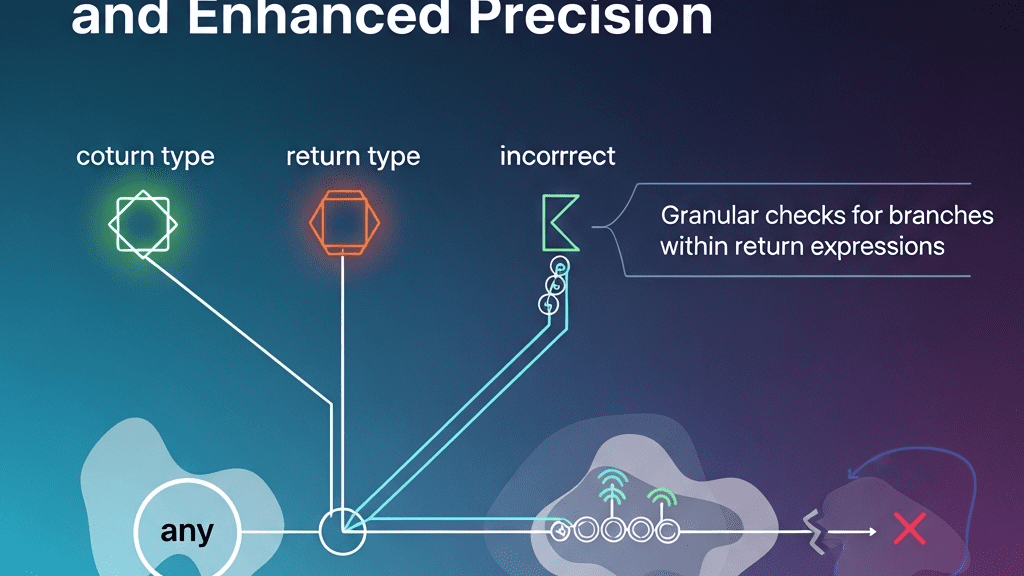
The journey from Beta to the final release of TypeScript 5.8 involved some strategic pivots. The team decided to iterate further on functions with conditional return types, moving that specific feature to the upcoming TypeScript 5.9 to ensure it meets our high standards for performance and correctness. However, this exploration led to a powerful secondary improvement: granular checks for branches within return expressions. This enhancement remained in 5.8 and provides a significant boost to how the type system handles complex return statements.
Granular Checks for Branches in Return Expressions
One of the most subtle bugs in TypeScript historically involved how conditional expressions (ternary operators) interacted with the any type in return statements. Consider a scenario where you are fetching data from an untyped cache:
declare const untypedCache: Map<any, any>;
function getUrlObject(urlString: string): URL {
  return untypedCache.has(urlString) ? untypedCache.get(urlString) : urlString;
}
In previous versions, this code would often pass the compiler despite containing a logic error (returning a string instead of a URL object). This happened because TypeScript would resolve the ternary operator into a union type—in this case, any | string—which simplifies down to any. Because any is compatible with everything, the compiler would lose the ability to catch the fact that urlString does not satisfy the URL return type.
TypeScript 5.8 changes the game by special-casing conditional expressions directly inside return statements. Now, the compiler checks each branch of the conditional independently against the declared return type. This prevents the “infectious” nature of any from masking errors in other branches, ensuring that every possible exit path of your function actually adheres to your type definitions.
Looking Ahead
While we look forward to the continued evolution of conditional types in version 5.9, the refinements in TypeScript 5.8 offer immediate value by catching real-world bugs that previously slipped through the cracks. This release reinforces our commitment to a type system that is not only powerful but also deeply intuitive for the developer.
Happy coding!
Source: Read the full article here.